By Camp Gear Atlas Editorial · September 14, 2026 · Research-based guidance
The useful answer
Buy a cot when the raised sleeping position solves a specific preference and the frame fits your tent. Compare assembled dimensions and rated capacity before packed weight. Then check entry, assembly, and the insulation you need above the fabric. The lightest cot is useful only if its narrower surface and lower load rating suit you.
The shortlist
As an Amazon Associate, we earn from qualifying purchases. How our links work.
For a compact low cot
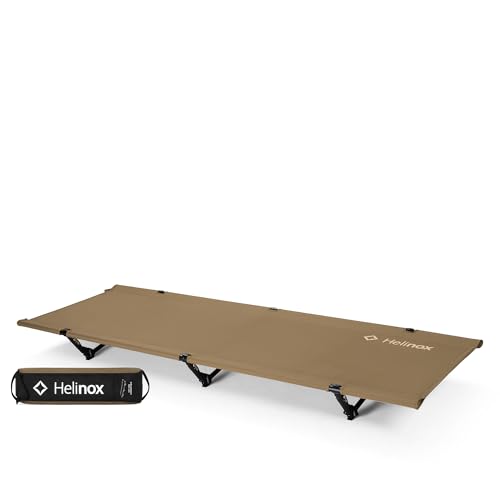
Helinox Cot One Convertible
The general frame option; allow for assembly force, pad insulation, and tent clearance.
Check on Amazon — Helinox Cot One ConvertibleSpecifications & tradeoffsFor extra sleeping length
Helinox Cot One Convertible L
The longer frame to evaluate; adds packed weight and needs an independent tent-fit check.
Manufacturer details Specifications & tradeoffsFor reducing the frame burden

Helinox Lite Cot
Lighter to carry; its narrower surface and lower capacity are substantial constraints.
Check on Amazon — Helinox Lite CotSpecifications & tradeoffs
Choose among these low frames for length or carrying weight
This shortlist compares three Helinox designs using manufacturer documentation. Cot One Convertible is the general low-frame option, the L adds sleeping length, and Lite Cot reduces the carrying burden with a narrower surface and lower load rating. It is a focused product-family comparison, not a market-wide test ranking.
First check whether a low cot provides the raised position you want. These frames do not reproduce the entry height of a household bed. If easier entry and rising are the reason for buying, try those movements on the exact cot before choosing between packed weights.
Three frames, three distinct compromises
The standard Helinox Cot One Convertible is the general low-frame candidate here. The Cot One Convertible L addresses extra length. Lite Cot reduces the carrying burden while using a narrower surface and lower stated capacity. This is a focused comparison within one documented product family, not a claim to rank every cot on the market.
Choose the row that corresponds to the actual constraint. Do not buy the L merely because it sounds more spacious if your main problem is width. Likewise, the lighter model should not win until you know that its dimensions and capacity suit the complete load and your sleeping position.
| Model | Manufacturer-documented distinction | Main tradeoff |
|---|---|---|
| Cot One Convertible | 75 × 26 × 6.5 in; 320 lb capacity | 4 lb 14.5 oz packed, plus any pad |
| Cot One Convertible L | 83 in stated length; 320 lb capacity | 6 lb 3 oz stated packed weight; verify full L footprint |
| Lite Cot | 73.5 × 23 × 5 in; 265 lb capacity | Narrower, lower bed despite lighter carrying weight |
Check support, access, and the tent together
A frame that fits your body may not fit your shelter. Measure the assembled cot at its full width and length, including any parts extending beyond the sleeping fabric. Inside a sloping tent, check cot and mattress clearance at their full assembled heights. Your head and sleeping bag need clearance too.
Practice sitting onto the cot, lying down, turning, and rising using the manufacturer’s instructions. Keep every support properly placed on a suitable level surface. Do not treat the rated capacity as approval for improvised use, jumping, or supporting extra people. It is a boundary to respect within the intended use of the product.
Leave a route to the door and check that the frame does not crowd zippers or block access to essential items. A cot consumes three-dimensional space, so a floor plan alone is not enough to establish fit.
Assembly effort is part of the purchase
Read the assembly sequence before ordering and, if possible, try it. Helinox notes that its lever system requires real force to engage. That makes a hands-on assembly trial particularly useful for anyone concerned about managing the frame independently. The relevant question is whether you can set up and dismantle the actual cot reliably, not whether the product page calls it easy.
Count and organize components after practice. Keep the carry bag and any permitted accessories together, and inspect joints and fabric as directed. If a pole, hub, or brace is damaged, use the maker’s repair route rather than inventing a substitute at the campsite.
On a touring trip, repeat setup and pack-down time matters every day. At a week-long base camp, you may tolerate a more involved first setup. Think about frequency as well as effort when comparing a frame with a pad-only bed.
Finish the insulation and carrying calculation
A suspended fabric surface is not automatically an insulated sleep system. Helinox’s own guidance acknowledges the effect of air beneath the cot and discusses adding a pad. Choose suitable insulation for the conditions and verify that the mattress is supported correctly on the frame. Do not assume that a cot and a pad with similar nominal widths are automatically compatible.
Add the frame, pad, pillow, upper covering, pump, and repair supplies to the transport list. If you will carry them, use the kit-weight tool to compare the complete arrangement with a suitable pad-only alternative. If they travel by car, measure the packed cot alongside the mattress rather than counting them separately in an otherwise empty trunk.
Revisit the shortlist
As an Amazon Associate, we earn from qualifying purchases. How our links work.
Sources & further reading
Helinox Cot One Convertible specifications ↗Helinox Cot One Convertible L details ↗Helinox Lite Cot specifications ↗National Park Service shelter and bedding checklist ↗Manufacturer specifications and guidance checked September 2026. Model generations and included accessories can change; confirm the exact version before ordering.
Continue in Cots, Pillows & Bedding.