By Camp Gear Atlas Editorial · September 14, 2026 · Research-based guidance
The useful answer
Move up to a six-person tent when the particular floor plan supplies space you need: another bed, a usable exit strip, or a place to dress. If the problem is one shared door or low walls beside a raised mattress, capacity alone may not fix it. Compare both tents with identical bedding before accepting the larger pitch and packed bundle.
The shortlist
As an Amazon Associate, we earn from qualifying purchases. How our links work.
Best four-person baseline for a pair
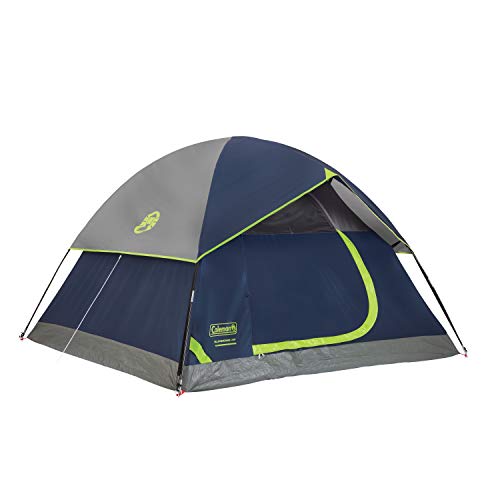
Coleman Sundome 4-Person Camping Tent
Useful for one mattress and a compact campsite routine; one door limits layout freedom.
Check on Amazon — Coleman Sundome 4-Person Camping TentSpecifications & tradeoffsBest larger dome for a simple kit

Coleman Skydome 6-Person Camping Tent
More floor and center height without a separate porch; wet gear needs another home.
Check on Amazon — Coleman Skydome 6-Person Camping TentSpecifications & tradeoffsBest for a larger interior and two entry zones

NEMO Aurora Highrise 6P
Steep walls and vestibules add functional space, while the complete pitch grows.
Check on Amazon — NEMO Aurora Highrise 6PSpecifications & tradeoffs
What fails in the smaller layout?
Put the intended beds into the four-person layout and identify the first task that fails. Perhaps the fourth pad cannot lie flat, one adult must cross a partner to leave, or nobody can sit on a high mattress without brushing the roof. Those are different problems. The first calls for a floor-fit check; the other two call for a closer look at access and wall shape.
Changing from a four-person model to a six-person model may also change doors, wall slope, frame, and vestibules. Write down which of those differences solves the problem. A second entrance in a smaller tent may help a couple more than unused floor at the far end of a larger single-door tent.
| Problem in the four-person layout | What to compare in the six-person tent | What the capacity label cannot establish |
|---|---|---|
| Beds overlap | Usable width and length for the same beds | Whether their outlines fit |
| Someone climbs across a bed to leave | Door placement and a continuous access strip | Where the spare space lies |
| A raised bed crowds the wall | Wall clearance at mattress and seated height | How upright the walls are |
| Wet shoes occupy the sleeping floor | Covered entry and a place for appropriate gear | Whether a vestibule exists |
Use the same beds in both drawings
For four rectangular pads each 25 inches wide, the combined width is 100 inches. Keep that number fixed while comparing floors. Rotating the bed arrangement may change both its fit and the space beside the doors; replacing those pads with narrower ones changes the sleeping system as well as the tent.
For a couple sharing an airbed, leave the mattress at its actual inflated height during the trial. More floor may create dressing space yet leave the same wall-contact problem over the bed. Check the route to the door with the clothing bag in position, rather than calling every leftover strip an aisle.
Three models illustrate different kinds of upgrade
The Coleman Sundome 4 is a compact baseline for two campers with one mattress: a nine-by-seven-foot floor, one door, and no vestibule. It is relevant when most activity happens outside. The bed orientation has to preserve access to that one door.
The Coleman Skydome 6 adds floor and center height, but the standard model still has no vestibule. Its pre-attached poles are a separate convenience. Compare it when the larger sleeping room itself solves the problem; do not count on upsizing to provide a covered shoe area.
The NEMO Aurora Highrise 6P changes entry organization as well as size. Two doors, vestibules, and steep walls may help a family dress and handle damp footwear. Its full pitch extends beyond the sleeping floor, so the features that improve indoor use also need room outside.
Check the cost at the site and in the car
Draw the fly, vestibules, and required guy lines around both floors. Check the reservation against that complete pitch, not just the inner tent. Keep the layout on the existing durable campsite; a larger tent should not require clearing ground or putting routine traffic into vegetation.
Compare the packed bundles with the actual vehicle load and the place where wet fabric will dry at home. On a one-night stop, a large shelter still has to be unloaded, pitched, lowered, and dried. Confirm that the adult normally available for setup can reach and manage all required attachments.
Make the decision from the failed task
Choose the larger model if the same beds now fit and the movement that failed in the smaller tent works. Keep the smaller tent if it passes those checks and the extra room would mainly store equipment that can live elsewhere. If neither passes, compare a different floor plan or wall shape instead of continuing to move up the capacity numbers.
Revisit the shortlist
As an Amazon Associate, we earn from qualifying purchases. How our links work.
Sources & further reading
Coleman Sundome 4-Person specifications ↗Coleman Skydome 6-Person specifications ↗NEMO Aurora Highrise product details ↗NEMO tent dimensions and sleeping-pad fit ↗Leave No Trace: durable campsites ↗Manufacturer specifications and guidance checked September 2026. Model generations and included accessories can change; confirm the exact version before ordering.
Continue in Camping Tents.
